The dried poppy heads are such a gift - not only do they contain the tiniest black seeds to scatter in Spring - gifting new life; they also provide endless inspiration for creative explorations - such as my little poppy beings.
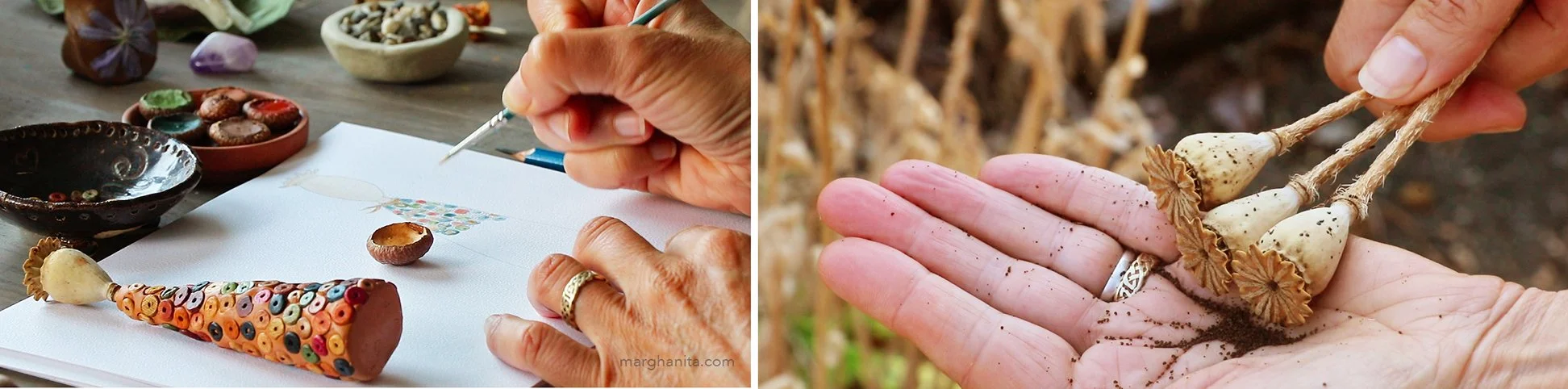
Yesterday I was playing with my poppy characters for my next workshop (a continuation of “We are made of Stories”).
While creating this particular poppy character, I was transported back to summer, gazing in awe and wonder at the huge headed, vibrant red poppies dancing in the wild grasses and for a moment, I could feel the warmth and joy wrap around me like a cozy blanket and imagined my beings in a field of poppies.
The red poppy is a symbol of remembrance of the First World War
Last night I began this little water colour painting. My uncle and my father in law were in the royal airforce and fortunately, it was near the end of the war so they were saved from action; which we are deeply grateful for. Sadly so many were not and I guess my painting is my way of remembering the men and woman who lost their lives. They are deeply loved and not forgotten.
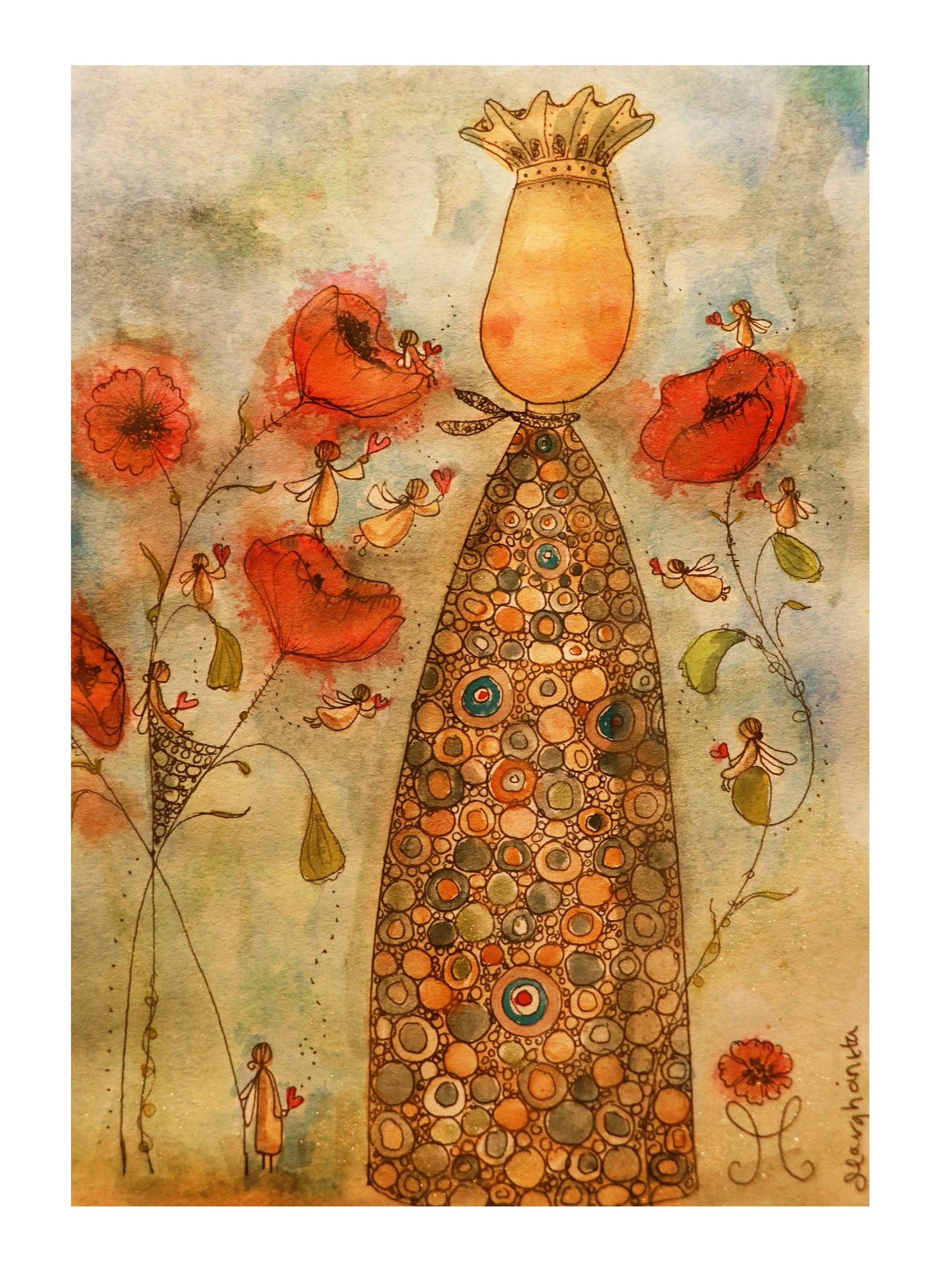
Remembering
This morning I awoke wanting to know more about the story of the remembrance poppy.
I came upon this beautiful story that I had never heard before, I knew that during the First World War, thousands of soldiers saw the poppies in Flanders fields on the Western Front, however, I had no idea that many soldiers would collect the fragile petals and press the poppies and send them home in letters to their loved ones. How deeply touching it was to read this. Here is a video on the history of the Remembrance Poppy :
The poppy back then was a symbol of hope, a moral boost, a burst of colour in very bleak landscapes during the first world war.
Artificial poppies were first sold in Britain in 1921 to raise money for the Earl Haig Fund in support of ex-servicemen and the families of those who had died in the conflict. They were supplied by Anna Guérin, who had been manufacturing the flowers in France to raise money for war orphans. Selling poppies proved so popular that in 1922 the British Legion founded a factory - staffed by disabled ex-servicemen - to produce its own. It continues to do so today.
Other charities sell poppies in different colours, each with their own meaning but all to commemorate the losses of war. White poppies, for example, symbolise peace without violence and purple poppies are worn to honour animals killed in conflict.
The poppy continues to be sold worldwide to raise money and to remember those who lost their lives in the First World War and in subsequent conflicts. (Reference: Imperial War Museum)
I will leave you with the poem 'In Flanders Fields' written by Lieutenant Colonel John McCrae, a physician from Guelph, Ontario, he wrote the poem after the funeral of a friend on the Western Front. Its opening image - poppies blowing between the rows of crosses - fixed the flower in the world's memory forever. Sadly McCrae, didnt survive the war.
In Flanders fields the poppies blow
Between the crosses, row on row,
That mark our place; and in the sky
The larks, still bravely singing, fly
Scarce heard amid the guns below.
We are the Dead. Short days ago
We lived, felt dawn, saw sunset glow,
Loved, and were loved, and now we lie
In Flanders Fields.
Take up our quarrel with the foe:
To you from failing hands we throw
The torch; be yours to hold it high.
If ye break faith with us who die
We shall not sleep, though poppies grow
In Flanders Fields.
May there be peace in the world, sending love and light on this sacred new day, peace Marghanita x